


Page 27 - Peter Farrelly Issue
P. 27
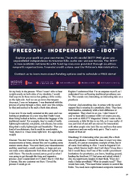
                 for my body in the process. When I wasn’t able to bear weight evenly on both sides of my shoulder, I would find ways to do these moves but getting a little wonky on the right side. And we can go down that tangent. Anyways, I was on Instagram. I was frustrated with the process of going through a clinic, and I saw this compa- ny that just seemed to be such a fresh slate almost.
It was new. It was really centered on the users and was looking at prostheses in a new way that I hadn’t seen them being looked at before, without the baggage of the traditional model. For example, they’re made of really lightweight material, not plastic, not silicone, but some- thing that’s really lightweight and breathable. That was kind of revolutionary, that it could be comfortable. Yeah, there it is. I have mine right here. It’s super-light- weight.
Grazian: You don’t have to be fit for one. You do some measurements at home, almost like you’re getting some custom tennis shoes. You send them your measurements and they send back a small, medium, or large and you can make some adjustments from there and tighten it up with Velcro. The results seemed just as good as what I was going to get through this long and expensive process. And I could return it if I didn’t like it. I felt like a human, like any customer out there. I loved the process. I could go on.
Kaplan: I understood that. I’m an amputee myself, so I understand how suffocating traditional prostheses can be. This sounds very interesting, an interesting take on a prosthesis.
Grazian: And something else, it comes with the social support that is missing in a prosthetic clinic. They have limb buddies, somebody with a limb difference or amputation. They check in on you. I don’t know if you’ve been able to connect with—of course you are, you work at ABILITY Magazine! I think I came to the community a little bit late in my life, so it was really—I was just kind of and still am starved for interactions with other people who look like me and have that same experience and can really truly get it. That’s such a breath of fresh air.
Macabuag: It’s interesting what you said, like a fresh take of prosthetics. I should be clear, it wasn’t my idea. Actually, it’s just an exemplary example of that, but it all came from talking to Alex. I went to Imperial Col- lege, which fancies itself—don’t tell them I’d say this— but it would fancy itself one of the world’s preeminent institutions for prosthetics, you know, breaking ground, leading the forefront. If I had gone and asked, which I did, my supervisors, leaders in their field, “How do I make a better prosthetic? What do people need?” They would have said, “You need better sensors to control the limbs. You need more sophisticated composite materials
ABILITY 27


